
 Get A Quote
Blog
CONTACTUS


The Fictional DC Motor That Powered a Legendary Submarine
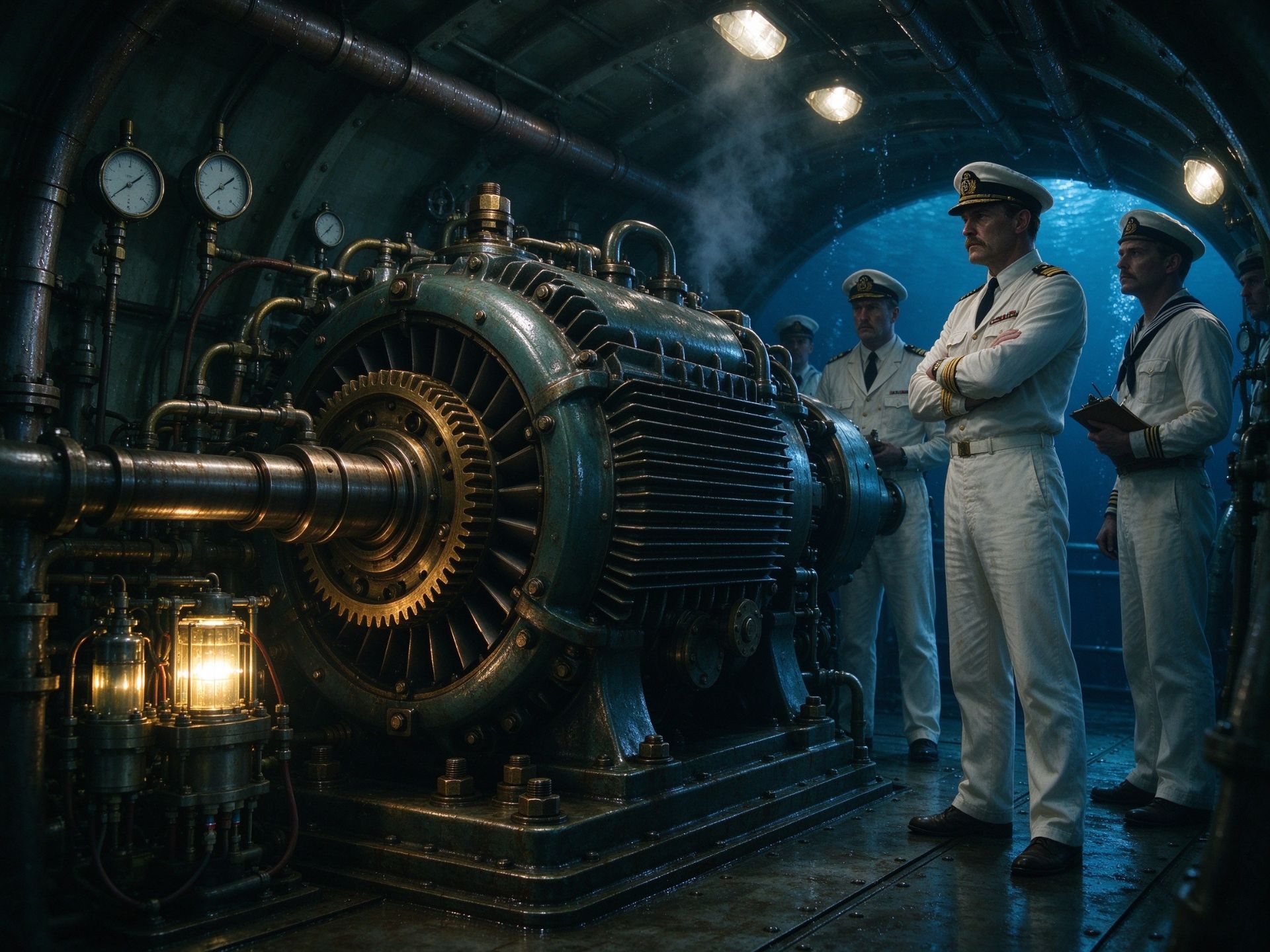
Title: Twenty Thousand Leagues Under the Seas
Author: Jules Verne
Nationality: French
Publish Year: 1870
Motor: Nautilus DC electric propulsion motor
Today I’d like to share the timeless adventure novel Twenty Thousand Leagues Under the Seas. One of its most memorable technical scenes takes place deep inside the engine room of the submarine Nautilus, where massive DC motors hum steadily to push the vessel through dark ocean waters.
The book follows Professor Pierre Aronnax, a French naturalist, his loyal servant Conseil, and the fiery harpooner Ned Land. They set out on a sea voyage to hunt a mysterious sea monster that has attacked many ships. After a violent collision, the three men fall overboard and discover that the so‑called monster is not a beast at all. It is the Nautilus, a secret submarine invented and commanded by the brilliant, lonely Captain Nemo. Nemo takes them as unwilling guests on an epic journey across every major ocean. Together, they witness glowing coral reefs, sunken ancient cities, frozen polar ice sheets, and terrifying sea creatures. They fight a ferocious giant squid, survive dangerous underwater volcanic eruptions, and uncover Captain Nemo’s hidden pain and anger toward the human world on land. At first, the three travelers are amazed by the submarine’s wonders, but Ned Land grows desperate to escape and return home. After months of breathtaking adventures and close calls, a violent storm finally gives them a chance to flee the Nautilus, leaving Captain Nemo and his strange underwater kingdom behind.
The giant DC propulsion motor is the beating heart of the Nautilus. Powered by electricity drawn from the sea, it turns the propeller silently and reliably. Without this powerful DC motor, the submarine could never dive deep, travel thousands of leagues, or hide from surface ships. Verne imagined this electric drive long before practical large‑scale underwater electric propulsion became common, making it a brilliant piece of early science fiction prediction. He did not just write a fun sea adventure; he wondered what humanity could build when science and imagination worked side by side. Back in the 1870s, most readers knew very little about electric motors, so this idea felt almost like magic. Even today, it is fun to notice how many of Verne’s wild guesses later turned into real engineering technology.
You might be wondering: how similar is this fictional DC motor to the marine electric motors we use today? Modern ships and submarines still rely heavily on electric propulsion systems, though the technology has improved hugely since Verne’s era. Motor efficiency, battery capacity, control systems, and noise reduction have all advanced dramatically. Many famous engineering firms around the world now design quiet, high‑power marine DC and hybrid propulsion motors for submarines, cargo ships and yachts. Some new designs focus on low noise for underwater stealth, just like Captain Nemo wanted for his secret Nautilus.
Jules Verne wrote this story more than 150 years ago, yet his curiosity about electric power still feels fresh. He saw electricity as a quiet, clean force that could unlock hidden corners of our planet. It is amazing that a fictional motor from an old adventure book can still connect us to modern marine engineering. Have you ever visited a ship engine room and seen a large marine propulsion motor in person? Do you think future electric marine motors will become even quieter and more powerful than what Verne dreamed up?