
 Get A Quote
Blog
CONTACTUS


A Story Inside a Heavy Electric Motor Factory Workshop
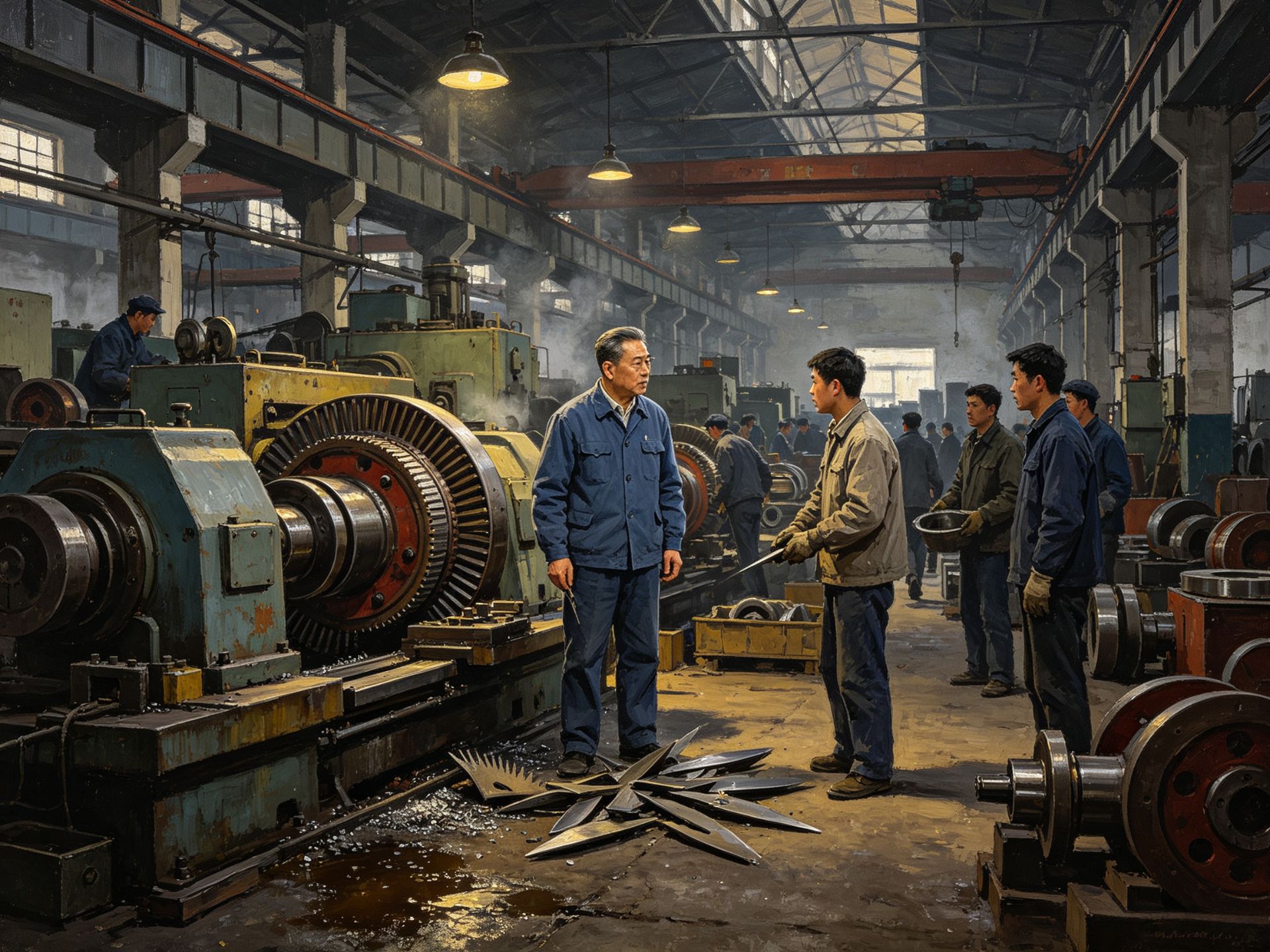
The story begins in a heavy electric motor factory workshop. Workers are moving between machines, parts are waiting to be assembled, and the air smells of oil, metal, and urgency. In the AC and DC motor workshop, a young worker is humming a foreign tune while carelessly tossing finished blades onto the floor. A man in his fifties stops, picks up a part, and asks sharply: “Are you a machinist or a scrap collector?” That man is Qiao Guangpu. He has just returned to a factory that has not fulfilled its production plan for two and a half years, and he is about to turn the whole place upside down.
The novel is called Qiao Changzhang Shangren Ji, or Director Qiao Takes Office. It was written by the Chinese author Jiang Zilong and published in 1979 in the seventh issue ofPeople’s Literature. It won the 1979 National Excellent Short Story Award and is widely regarded as one of the earliest and most influential works of “reform literature” in contemporary Chinese fiction.
The plot is simple but energetic. A heavy electric motor factory is in trouble. Production is falling, management is confused, and some cadres are more interested in avoiding responsibility than solving problems. Qiao Guangpu, a former factory director and now a company manager, volunteers to return. He even makes a bold promise: if he fails to complete the state production plan, he will accept removal from all his posts.
Once in office, Qiao does not hold long meetings just to sound important. He puts more than nine thousand employees through a factory-wide assessment. Those who cannot do the work, do not want to do the work, or only pretend to do the work are moved out of their posts. The remaining workers become a leaner, more serious team. Qiao also forms a “service brigade” from those who are reassigned, replacing more than a thousand long-term temporary laborers. Skilled and hardworking workers begin to earn bonuses, and the workshop atmosphere changes from lazy confusion to nervous competition.
Of course, not everyone is happy. A young worker named Du Bing is so angry at being reassigned that he feels ready to fight Qiao. A deputy director, Ji Shen, is publicly exposed during a “test the directors” session in the factory auditorium. Workers crowd in to watch, and Ji Shen is unable to answer basic questions about factory management. He is instantly nicknamed the “surplus director.” Humiliated, he quietly becomes one of Qiao’s opponents.
Qiao also faces personal complications. He reappoints Xi Wangbei, a former adversary who once attacked him during the Cultural Revolution, because he believes the factory needs capable people, not personal revenge. He also marries Tong Zhen, an engineer he has long respected and loved, partly to silence malicious rumors. In short, Qiao fights on many fronts: production targets, outdated habits, office politics, damaged reputations, and the heavy pressure of modernization.
Humorously speaking, this novel is like a 1979 workplace drama with very high stakes. There is no HR department to soften the message. There is no anonymous suggestion box. There is only Qiao Guangpu walking into the workshop, looking at a poorly handled part, and asking the kind of question that makes everyone suddenly remember their job description. If today’s factories had a “Qiao mode,” turning it on would probably cause half the managers to update their résumés immediately.
Yet the story is not just about one tough director. It is about a moment when China wanted to move forward again. The heavy electric motor factory stands for a larger problem: how to restart production, restore responsibility, and make people believe that work still matters. Qiao Guangpu may seem almost too heroic, but that is part of the novel’s charm. He represents the hope that a factory, and perhaps a society, can be repaired by courage, competence, and clear rules.
Back at our own Pinghao Electric Motor Factory, we also make electric motors. But honestly, nothing this dramatic happens here. No one stands in the AC and DC motor workshop shouting, “Are you a machinist or a scrap collector?” No deputy director is publicly examined in the auditorium. No one forms a “service brigade” out of reassigned staff. At Pinghao, our biggest reform is usually remembering to sign the attendance sheet on time.
So if Qiao Guangpu ever visits Pinghao, he might sigh, roll up his sleeves, and ask, “Where is the problem?” And we would probably answer, “Director Qiao, please lower your voice. Our motors are running quietly.”