 Get A Quote
BLOG
CONTACTUS


Rotor Shaft Press-Fit Process for Small DC Motors
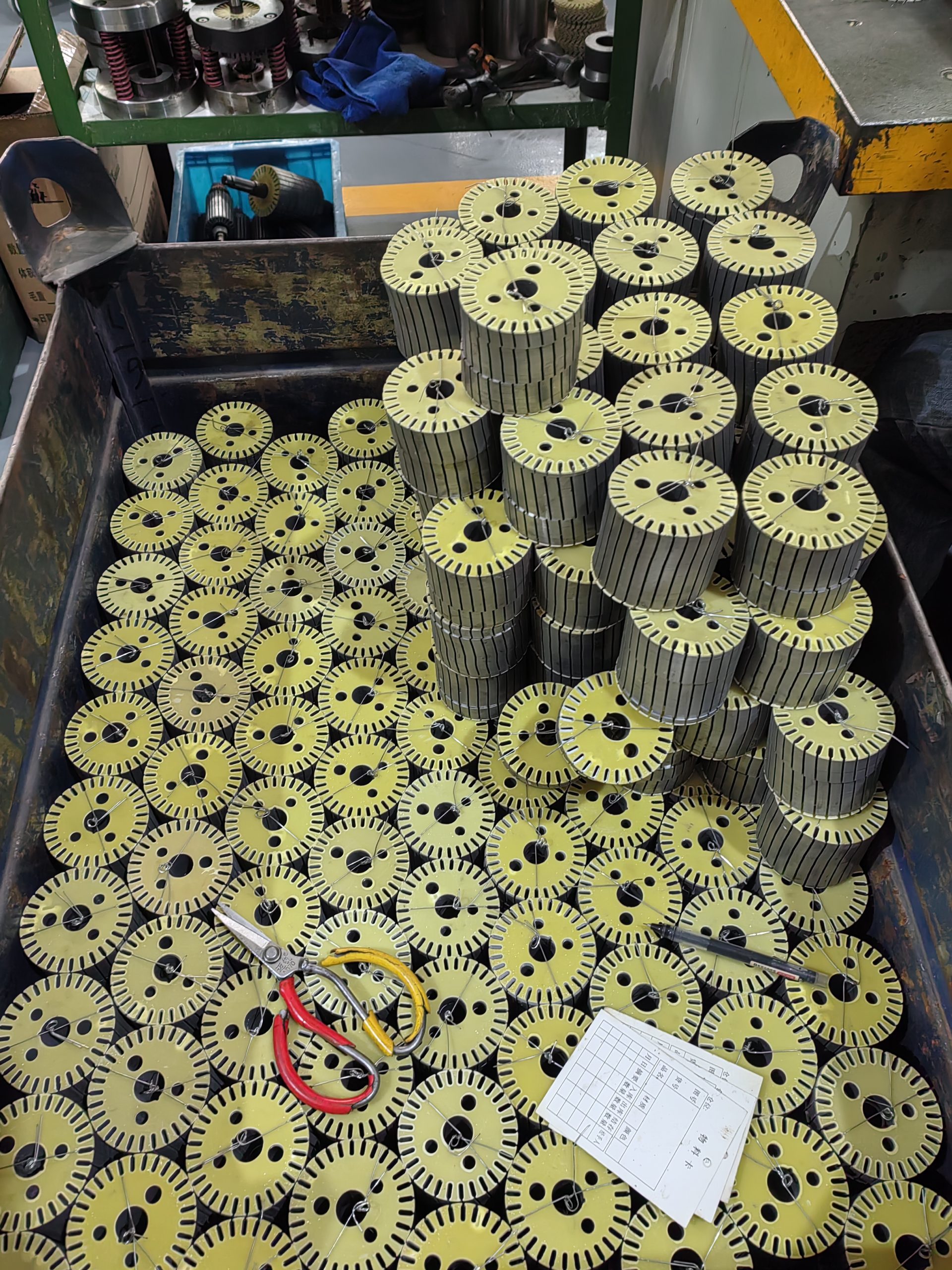
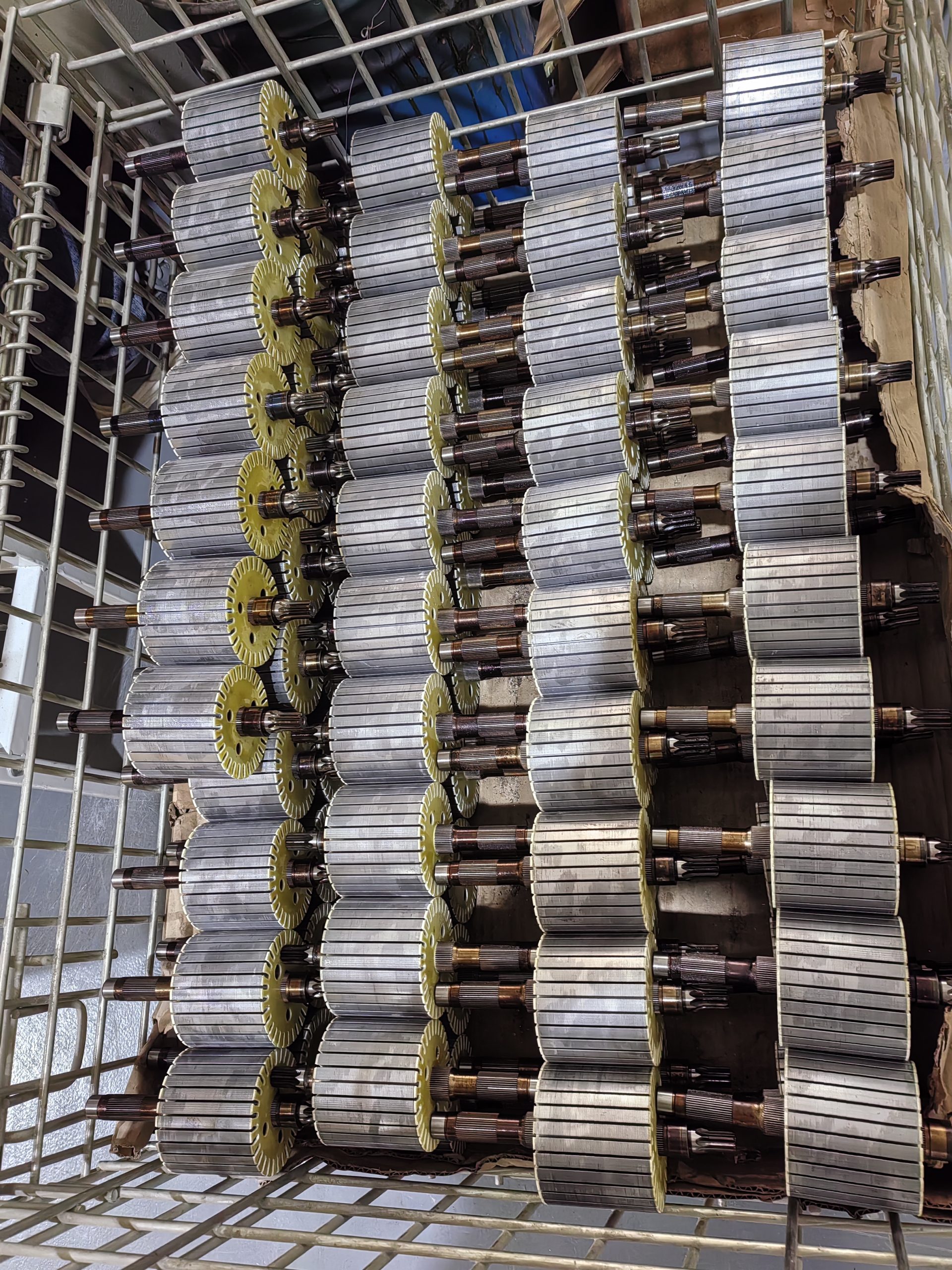
Rotor shaft press-fit is a key process in DC motor rotor assembly. The main task of this process is to press the shaft accurately into the center hole of the rotor core, forming a stable and reliable connection between the shaft and the core. This provides the concentricity and structural stability required for subsequent motor operation.
This step can be done in three methods explained as the following.
1. Manual Shaft Press-Fit
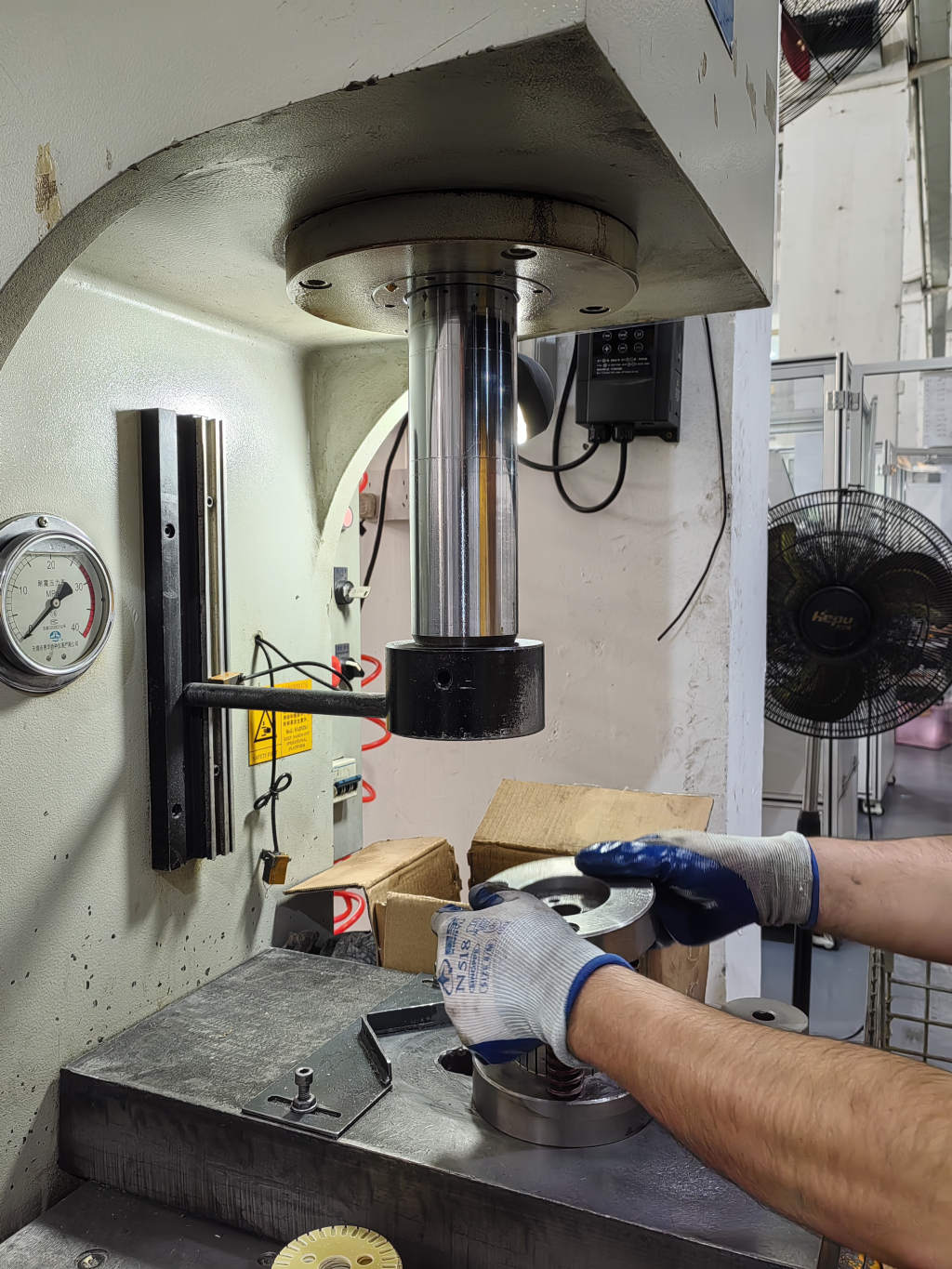
Manual shaft press-fit is usually carried out using manual presses, small hydraulic presses, hammering tools, or simple press-fit fixtures. The operator places the rotor core into a locating seat, manually inserts the shaft into the center hole of the core, and then presses the shaft into position using a press or hammering tool.
The advantage of manual press-fit is low equipment cost and simple tooling, making it suitable for small-batch production, multi-variant production, or trial production. It is also easier to adjust when motor specifications vary frequently. The disadvantages are that quality depends heavily on operator experience, and press force, press speed, and press depth are difficult to control precisely. This may lead to shaft misalignment, uneven core loading, inconsistent press-fit height, and relatively low production efficiency.
2. Semi-Manual / Semi-Automatic Shaft Press-Fit
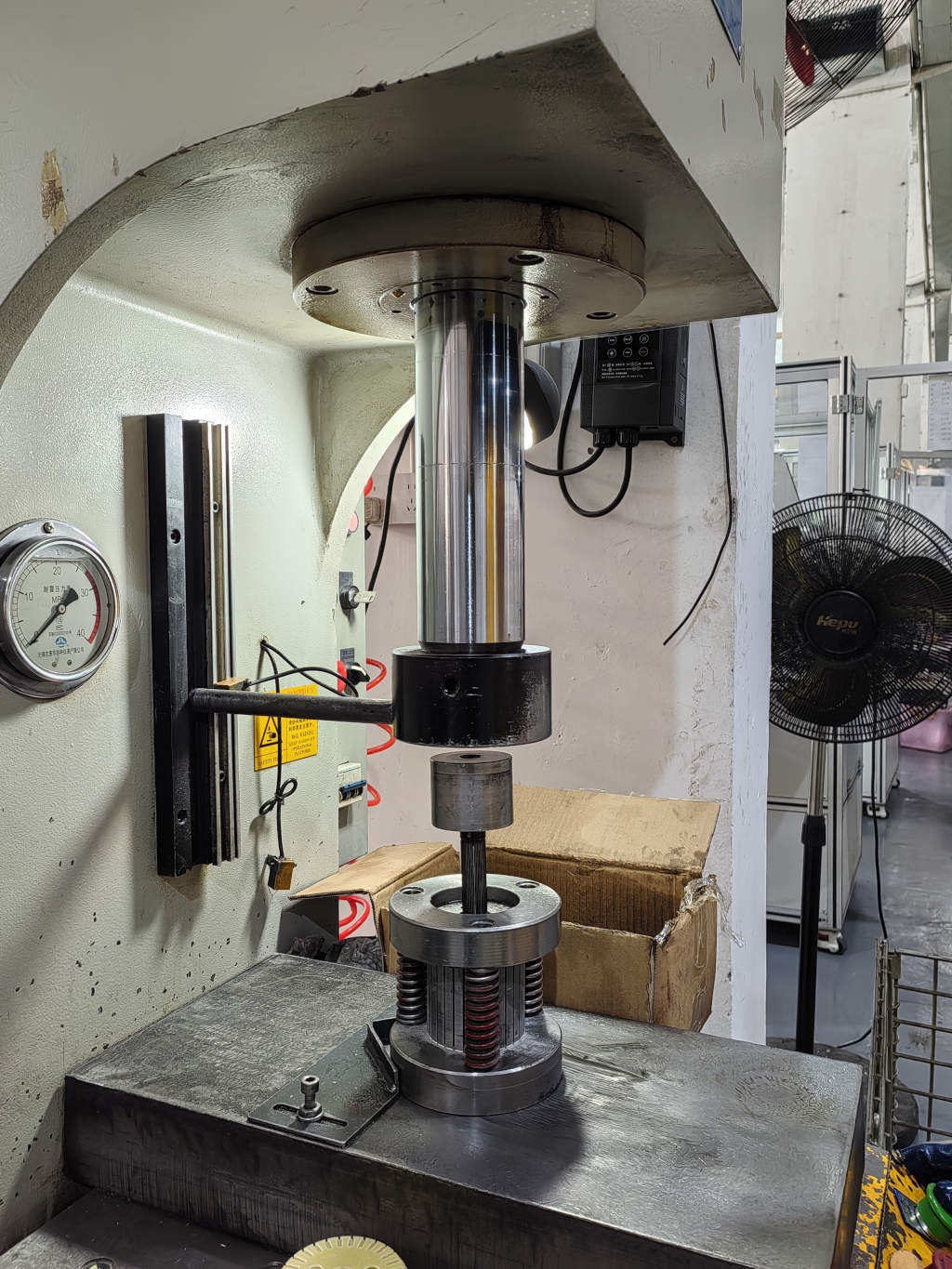
Semi-automatic shaft press-fit lies between manual and fully automatic methods. A common arrangement is manual loading + machine press-fit + manual unloading. The equipment usually adopts pneumatic presses, hydraulic presses, servo presses, or air-oil booster presses, together with special locating seats, guide sleeves, pressure sensors, and displacement sensors.
After the operator places the rotor and shaft into the fixture and presses the start button, the equipment completes the press-fit according to the preset pressure and stroke. Some machines also monitor press-fit height, press force, and press-fit curves to judge whether the product is acceptable.
The advantage of semi-automatic press-fit is lower equipment cost than fully automatic lines and relatively flexible changeover, making it suitable for medium-batch production. With guide sleeves and locating fixtures, problems such as shaft misalignment, core deformation, and press-depth deviation are significantly reduced compared with manual methods. The disadvantages are that manual loading and unloading are still required, cycle time is affected by manual operation, and consistency is not as stable as that of fully automatic lines.
3. Fully Automatic Shaft Press-Fit
Fully automatic shaft press-fit is usually composed of servo press units, robots or transfer mechanisms, vibratory bowls or magazines, vision or sensor inspection systems, and conveyor lines. The equipment can automatically perform rotor core loading, shaft loading, alignment, press-fitting, height inspection, defective part sorting, and unloading.
Common technical routes for fully automatic press-fit include:
Servo press lines: closed-loop control of force and displacement, suitable for products with high requirements for concentricity, press-fit depth, and press-fit curves.
Pneumatic/hydraulic press lines: relatively simple structure, suitable for large-batch production with stable specifications.
Rotary or multi-station press lines: multiple stations operate simultaneously, providing high cycle rates and suitability for mass production.
Linear conveyor-type press lines: combined with robots and conveyors, making it easier to connect with winding, commutator assembly, dynamic balancing, and other processes.
The advantages of fully automatic press-fit are high efficiency, good consistency, low dependence on manual labor, and recordable press-fit data for quality traceability. The disadvantages are high equipment investment, complex changeover requiring fixture and program adjustment, and higher requirements for incoming part dimensions, part cleanliness, and equipment maintenance.
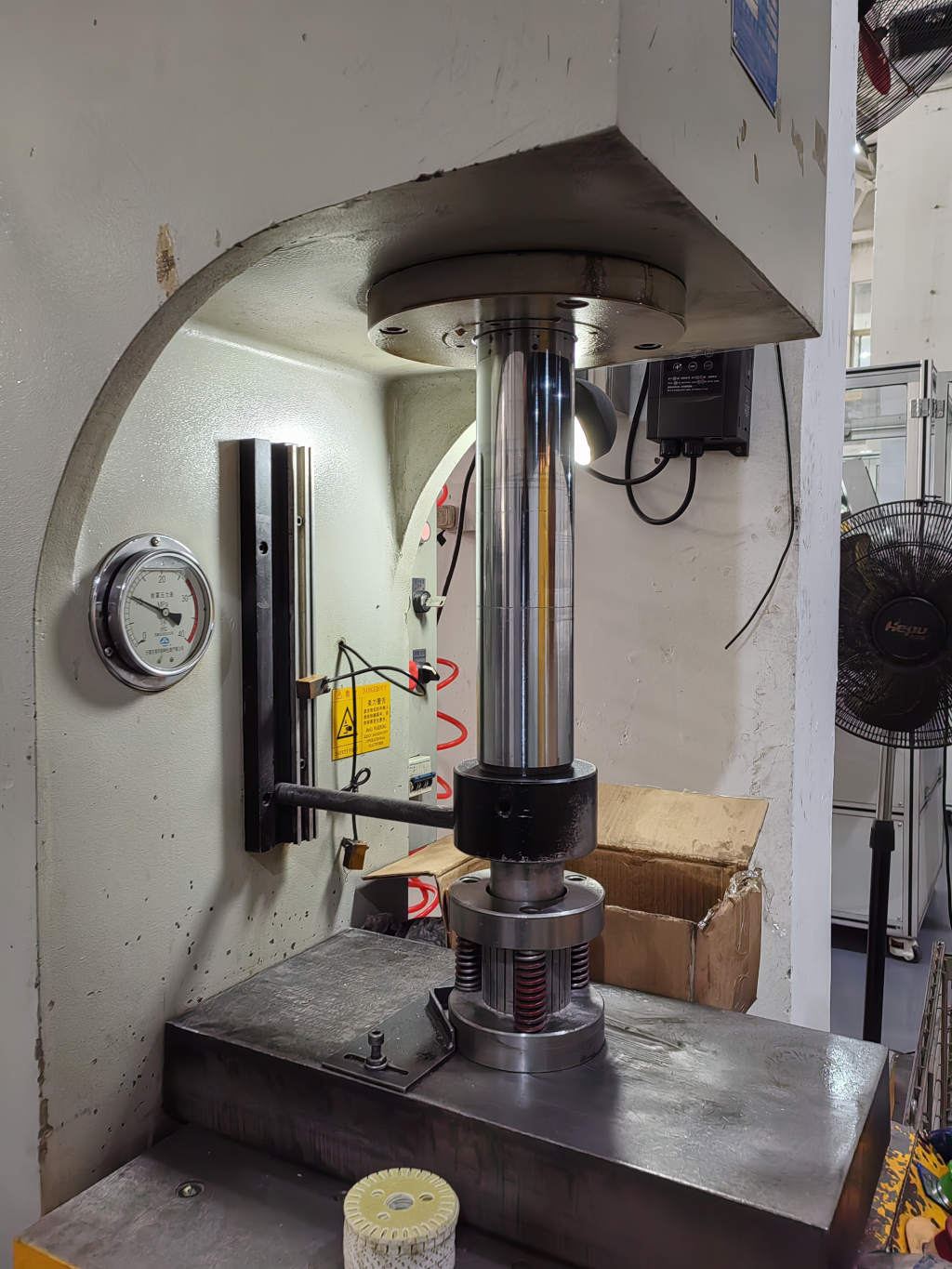
4. Comparison of the Three Methods
The choice of press-fit method depends largely on production volume and product variety. Manual press-fit is best suited for small-batch production, trial runs, or multi-variant scenarios. Its main advantages are low cost and high flexibility, but it suffers from poor consistency, low efficiency, and quality that heavily depends on the operator’s skill.
Semi-automatic press-fit is ideal for medium-batch production with frequent changeovers. It offers better accuracy and efficiency than manual methods. However, it still requires manual loading and unloading, which limits the cycle rate compared to fully automated solutions.
Fully automatic press-fit is designed for large-batch, standardized production. It delivers high consistency, high efficiency, and traceable data for quality control. The trade-offs are a higher initial equipment investment and more complex changeover processes.
For DC motors in the 0.8 kW to 5.5 kW range, semi-automatic shaft press-fit usually offers the best cost-performance ratio when product specifications vary and order volumes are unstable. If product specifications are stable, production volume is high, and customers have strict requirements for concentricity, radial runout, and surface quality, a fully automatic servo press-fit line can better ensure stable long-term quality performance.