
 Get A Quote
BLOG
CONTACTUS


China’s DC Motor Exports for Hydraulic Applications in 2026: Market Trends and Key Destinations
Sep 16,2026
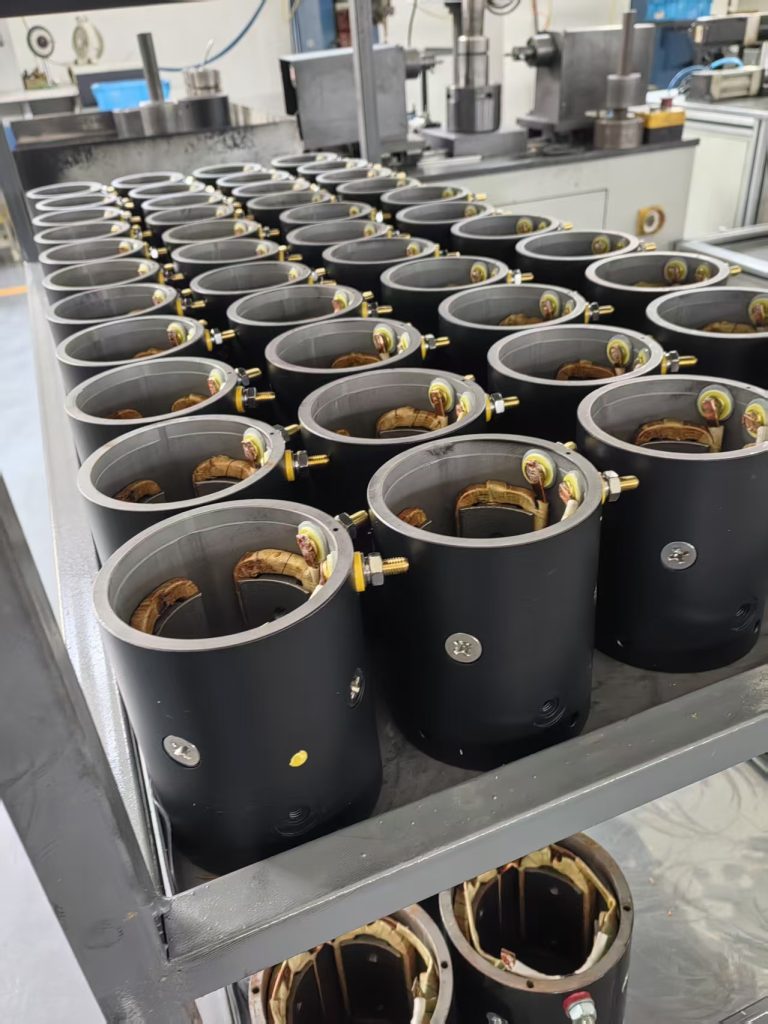
China’s DC Motor Exports for Hydraulic Applications in 2026: Market Trends and Key Destinations
In 2026, China’s exports of DC motors used in hydraulic applications have continued to grow, driven by global demand for construction machinery, material handling equipment, agricultural machinery, industrial automation, and hydraulic power units.
Although “hydraulic DC motors” are often supplied as part of integrated electro-hydraulic systems rather than as a single standardized product category, the broader export performance of Chinese DC motors and hydraulic power components shows a clear upward trend.
For manufacturers supplying low-voltage DC motors for hydraulic systems, including 12V, 24V, and 48V models, 2026 has become an important year for overseas expansion. Rising demand from equipment OEMs, logistics automation projects, and industrial modernization programs has created new export opportunities, even as raw material costs, trade barriers, and regional competition place pressure on pricing and market strategy.
Overall Export Performance in 2026
China’s DC motor exports have remained strong in 2026. Data for small DC motors and generators with output power not exceeding 750W show that monthly export values reached RMB 3.03 billion in July 2026, up from RMB 2.90 billion in June 2026. This represents a month-on-month increase of about 4.4%, indicating sustained export momentum.
For larger DC motors and generators with output power between 75kW and 375kW, export values were RMB 81.8 million in July 2026, down from RMB 123.6 million in June 2026. However, earlier in 2026, exports in this category reached a high of RMB 165.1 million in April, showing that demand can be strong but may fluctuate by month depending on project shipments, customer orders, and regional delivery schedules.
These figures cover the broader DC motor export category rather than hydraulic-specific motors alone. However, because low-voltage DC motors are widely used to drive hydraulic pumps, lifting systems, steering systems, and power packs, the trend is highly relevant to hydraulic application suppliers.
Strong Growth Markets
Southeast Asia
Southeast Asia has become one of the most important growth markets for Chinese DC motors used in hydraulic applications. Countries such as Indonesia, Vietnam, Thailand, the Philippines, and Malaysia are expanding their infrastructure, logistics networks, manufacturing capacity, and agricultural mechanization.
Demand is growing in several areas:
- Construction machinery and lifting equipment
- Forklifts, stackers, and warehouse handling systems
- Agricultural machinery with hydraulic functions
- Small industrial hydraulic power units
- Logistics automation and material handling equipment
Southeast Asian buyers often value Chinese motors for their competitive pricing, flexible customization, and relatively short delivery times. For low-voltage hydraulic applications, 24V DC motors are especially common because they match well with industrial control systems, battery-powered equipment, and mobile hydraulic units.
Middle East
The Middle East remains an important market for hydraulic equipment, particularly in construction, oil and gas support equipment, municipal vehicles, water infrastructure, and industrial maintenance. Projects related to urban development, port expansion, and industrial modernization continue to create demand for hydraulic power units and the DC motors that drive them.
Chinese suppliers have been able to gain market share by offering practical solutions for harsh operating environments, including high temperatures, dust, and continuous-duty applications. Motors used in hydraulic systems for cranes, lifts, compressors, and special vehicles are often required to provide stable torque, reliable cooling, and long service life.
Latin America
Latin America has also shown growing interest in Chinese hydraulic and motor products. Brazil, Mexico, Colombia, Chile, and Peru are important markets for agricultural machinery, mining support equipment, logistics equipment, and industrial hydraulic systems.
In agriculture, hydraulic DC motors are used in equipment such as sprayers, spreaders, trailers, and processing machinery. In logistics and industrial applications, they are used in lifting platforms, conveyors, and small hydraulic power packs. The region offers good potential for Chinese suppliers, especially for cost-effective 12V and 24V DC motors that can be integrated into existing hydraulic systems.
Eastern Europe and CIS Markets
Eastern Europe and CIS countries have become increasingly important for Chinese motor exports. These markets often require durable, cost-efficient components for industrial machinery, agricultural equipment, and hydraulic power systems.
The demand is not only for replacement parts but also for complete hydraulic power units and customized motor solutions. Buyers in these regions tend to focus on reliability, delivery stability, and the ability to match technical specifications such as voltage, speed, torque, mounting size, and protection rating.
Markets Facing Pressure
United States
The United States remains a major market for motors and hydraulic components, but Chinese exports to this market have faced increasing pressure in 2026. Trade barriers, tariff risks, compliance requirements, and supply chain localization trends have made it more difficult for some Chinese motor products to grow quickly.
For higher-end industrial motors, export volumes to the United States have shown weakness. Buyers in the U.S. market often require strict certification, traceability, quality documentation, and after-sales support. In some cases, procurement decisions are also influenced by preferences for regional or alternative supply sources.
This does not mean the U.S. market is unimportant. However, Chinese suppliers may need to focus more on compliance, product certification, technical documentation, and long-term cooperation with qualified distributors or OEM customers.
Western Europe
Western Europe continues to be an important market, but growth is more selective. European buyers often require high efficiency, low noise, strong EMC performance, and compliance with international standards. For hydraulic applications, motors must also meet requirements for thermal performance, protection rating, insulation class, and continuous-duty reliability.
The European market is shifting toward higher-efficiency motors and more integrated electro-hydraulic solutions. This creates opportunities for Chinese suppliers that can offer brushless DC motors, customized mounting interfaces, CAN communication, and complete hydraulic power unit solutions. However, suppliers that only compete on price may find it difficult to win long-term orders.
India
India is both a growing market and an increasingly competitive one. On one hand, demand for hydraulic motors is rising in agriculture, construction, material handling, and industrial machinery. On the other hand, India is expanding its local manufacturing capacity and reducing import dependence for some motor and hydraulic components.
Chinese suppliers can still find opportunities in India, especially for specialized hydraulic motors, customized power packs, and applications where fast delivery and flexible MOQs are important. However, price competition is strong, and buyers may compare Chinese offers with local suppliers and other Asian sources.
Key Drivers Behind the Export Growth
Global Demand for Hydraulic Equipment
Hydraulic systems remain essential in construction machinery, forklifts, lifting platforms, agricultural machinery, sanitation vehicles, mining support equipment, and industrial automation. Many of these systems rely on DC motors to drive hydraulic pumps or control hydraulic functions.
As global infrastructure, logistics, and manufacturing activities continue to recover and expand, demand for reliable hydraulic power units has remained solid. This has directly supported exports of DC motors used in hydraulic applications.
Expansion of Material Handling and Logistics Equipment
Forklifts, stackers, AGVs, lifting platforms, and warehouse automation systems often use low-voltage DC motors. As e-commerce, cold chain logistics, and smart warehousing grow, more equipment manufacturers are looking for stable motor suppliers.
For Chinese motor manufacturers, this is an important export opportunity. Customers in this segment usually care about torque stability, thermal performance, duty cycle, mounting compatibility, and price competitiveness.
Agricultural Machinery Modernization
Agricultural machinery is another strong application area. Hydraulic DC motors are used in equipment such as sprayers, fertilizer spreaders, harvesters, trailers, and processing machines.
In developing markets, buyers often prefer practical, durable, and affordable motor solutions. Chinese suppliers can compete well in this segment by offering standard 12V and 24V models with flexible customization.
Cost Competitiveness of Chinese Manufacturing
Chinese motor manufacturers still have strong advantages in production scale, supply chain completeness, customization flexibility, and delivery speed. For overseas OEMs and equipment integrators, working with Chinese suppliers can help reduce procurement costs and shorten development cycles.
However, cost advantage alone is no longer enough. Buyers are placing more importance on quality consistency, technical support, certification, and after-sales service.
Challenges Affecting Exports
Rising Copper Prices
Copper is one of the most important raw materials for DC motors. In 2026, copper prices have remained at high levels, which has increased the cost of motor windings, stator coils, connectors, and conductive components.
For hydraulic application motors, copper windings are especially important because they directly affect torque output, thermal performance, and efficiency. When copper prices rise, motor manufacturers face higher production costs, and this pressure may be passed on to customers through price adjustments.
Raw Material Cost Pressure
In addition to copper, other materials such as permanent magnets, silicon steel, bearings, and electronic components also affect motor costs. Price fluctuations in these materials can make it difficult to maintain stable quotations, especially for long-term OEM customers.
This has pushed many Chinese suppliers to improve production efficiency, optimize motor design, and offer more flexible pricing based on order volume and delivery schedules.
Trade Barriers and Compliance Requirements
Different countries have different requirements for motor imports. Some markets require CE, UL, RoHS, REACH, or other certifications. Some buyers also require test reports, material declarations, and quality traceability.
For Chinese exporters, compliance has become more important than before. Suppliers that can provide complete documentation and stable product quality are more likely to win serious customers.
Competition from Local Manufacturers
In some markets, local motor and hydraulic component manufacturers are becoming stronger. India, Mexico, Turkey, and parts of Southeast Asia are developing their own supply chains. This means Chinese suppliers can no longer rely only on low prices. They must also improve product reliability, technical service, and brand trust.
Product Trends in Hydraulic DC Motor Exports
24V DC Motors Remain the Mainstream Choice
For hydraulic applications, 24V DC motors are still the most widely used voltage level. They are common in forklifts, lifting platforms, truck tail lifts, agricultural machinery, sanitation vehicles, and industrial hydraulic power units.
24V motors offer a good balance between safety, efficiency, and compatibility with industrial control systems. For many OEM customers, 24V is the default choice for low-voltage hydraulic applications.
12V Motors Are Important for Smaller Systems
12V DC motors are often used in smaller hydraulic systems, light-duty lifting equipment, vehicle accessories, and portable hydraulic power units. These motors are popular in markets where equipment is powered directly from vehicle batteries or small DC power sources.
48V Motors Are Growing in Higher-Power Applications
48V DC motors are becoming more important in higher-power applications such as electric forklifts, AGVs, electric material handling vehicles, and advanced hydraulic systems. Compared with 12V and 24V motors, 48V motors can reduce current, lower cable losses, and improve efficiency in heavier-duty applications.
Brushless DC Motors Are Gaining Attention
Although brushed DC motors are still widely used due to their simple control and lower cost, brushless DC motors are gaining attention in applications that require longer life, lower noise, higher efficiency, and better reliability.
For hydraulic power units and industrial equipment, brushless motors can be a strong selling point, especially for customers upgrading from older hydraulic systems.
What This Means for Motor Exporters
For Chinese manufacturers of DC motors for hydraulic applications, 2026 is a year of both opportunity and pressure.
The opportunities are clear:
- Southeast Asia, the Middle East, Latin America, and Eastern Europe continue to offer strong demand
- Hydraulic equipment, logistics machinery, and agricultural machinery remain important application areas
- Chinese manufacturing still has advantages in cost, customization, and supply chain speed
- Low-voltage DC motors for 12V, 24V, and 48V hydraulic systems have broad export potential
The challenges are also real:
- Copper and raw material costs are pushing up production expenses
- The U.S. market faces trade and compliance pressure
- European buyers require higher technical and certification standards
- Local manufacturers in some countries are becoming stronger competitors
To succeed in 2026 and beyond, Chinese exporters should focus not only on price, but also on product quality, technical documentation, certification support, stable delivery, and after-sales service. For customers buying DC motors for hydraulic systems, the most important factors are usually torque performance, thermal stability, voltage compatibility, mounting size, protection rating, and long-term reliability.
China’s exports of DC motors for hydraulic applications have shown a generally positive trend in 2026. Growth is strongest in Southeast Asia, the Middle East, Latin America, and parts of Eastern Europe, while the U.S. and some Western European markets require more attention to compliance, certification, and technical value.
For manufacturers supplying 12V, 24V, and 48V DC motors to hydraulic equipment customers, the key to export growth is to combine competitive pricing with reliable quality, clear technical specifications, and strong customer support. As global demand for hydraulic machinery, logistics equipment, and industrial automation continues to grow, Chinese DC motor suppliers still have significant opportunities in overseas markets.
--- END ---
Prev: China Industrial Exhibition
Already the latest article